The Latrobe River is already on life support, needing more water, not less - so why are mining companies getting it for next to nothing?
Navigation: Learn more about the issue | have your say / make a submission
2026 update
In late 2025, the Victorian Government approved AGL’s application to take 35GL water from the Latrobe River system to rehabilitate the Loy Yang coal mine, following two rounds of public consultation and sustained community advocacy.
Under the decision, AGL is required to pay $230 per megalitre per year for water taken from the Latrobe River system once rehabilitation begins. The funds will be allocated to Regional Development Victoria’s Regional Jobs and Infrastructure Fund. While this represents a step forward in recognising that water has value, the decision has also raised serious concerns for the health of our waterways.
Significant concerns also remain about cumulative water impacts across the Latrobe system. Yallourn is yet to submit its water application, and recent groundwater approvals at Hazelwood allow extraction levels well above historical averages, despite ongoing land subsidence and infrastructure damage linked to over-extraction.
Together, these decisions risk compounding pressure on an already stressed river and aquifer system, highlighting the urgent need for stronger safeguards, transparency and accountability in how water is allocated, and how the damage from coal mining is repaired.
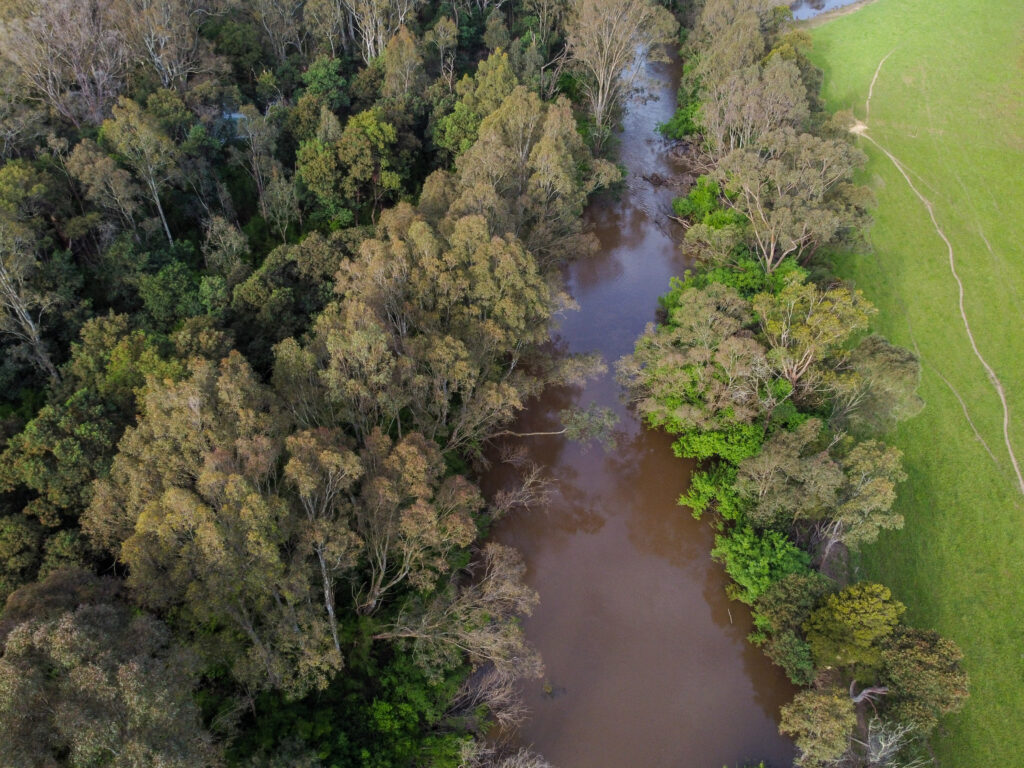
Known as Durt’Yowan to the Gunaikurnai people, the Latrobe River flows from the Victorian Alps through Gippsland into the internationally protected Gippsland Lakes. For thousands of years, it has sustained communities, culture and ecosystems.
But now, even as we’re seeing the catastrophic impacts of water constraints on creatures like the Burrunan dolphins, mining companies are planning to take more than four Sydney Harbours’ worth of water from this already-stressed river system.
Cleaning up Latrobe Valley’s three coal mines isn’t simple, or easy. The communities who live closest to the mines know the challenges – like making sure toxic coal ash doesn’t contaminate groundwater and making the mine pits safe and stable. It’s really important that however these issues are addressed, that the costs of clean up aren’t put on local community and our rivers – and we have an opportunity now to put that right.
Let’s break down what is happening and what you can do about it:
Help make sure our rivers aren’t being sold out
In a huge win for local advocates, the Victorian Government is consulting the public on whether and how mine operators (like AGL at Loy Yang) should pay for access to water from the Latrobe River system to fill their coal pits as part of mine rehabilitation. This is part of the broader Latrobe Valley Regional Rehabilitation Strategy (LVRRS).
Why this matters
A report commissioned by the government found that water should be priced to reflect Opportunity cost = what society forgoes by giving water to mine rehab instead of other uses (eg. restoring nature, supporting agriculture, water for Traditional Owners). Setting the price of water too low undervalues water and burdens the public.
Unrealistic pricing also distorts decision-making about mine cleanup. Last year, a study into alternative water sources (like recycled or desalinated water) ruled them out due to cost, but these comparisons were made using a very low price for river water. If the price of water is raised to align more closely with it’s true value, it might make other options more viable, leaving more water for our rivers.
And if mine operators still choose to take river water, but are required to pay a fairer price, this money could be directed to programs that help protect and restore our rivers like purchasing areas of floodplain, restoring wetlands, recreating meanders, and installing fish ladders.
Everything you need to write your submission
Big coal companies, including AGL, want to access water from the Latrobe River system to fill their open-cut coal pits. The Victorian Government is now consulting on:
These will shape the future of the Latrobe River, Gippsland communities, and how we hold polluters accountable.
This consultation was added after the government heard from the community (that’s you!) that they wanted to see fair and transparent pricing for the water taken from the local river system.
Your submission is an important part of the democratic process. The Minister is legally required to consider all submissions when making decisions about these water entitlements.
These decisions will affect water availability, environmental health and community wellbeing for decades to come
Visit this website:
Engage Victoria.
Then you can either fill in the online survey (you can skip questions you don’t want to answer) or upload your own written submission.
If you answer the survey’s pre-filled questions:
“Is there anything else that you would like to say that you think is relevant to this consultation?”
To show your support for reinvesting any revenue from the water purchased for mine rehabilitation, back into the Latrobe Valley reiver system.
If you want to write a longer submission, here's how:
Through this consultation we’re calling on the Victorian Government to:
No other commercial users — not even local farmers — get free access to bulk water. Mining companies should pay at least the opportunity cost of taking water from the river (as recommended by the government’s own experts), especially when they’ve profited from these lands and rivers for decades.
The independent report into water pricing, commissioned by the government, has recommends a pricing ($200-$260 per ML) that balances the need to better account for the value of our water, while ensuring cost doesn’t create a barrier to progressing mine rehabilitation.
Water isn’t just an input for mine rehab. It sustains ecosystems, supports Traditional Owners’ self-determined water rights, and underpins Gippsland’s future economy. Pricing must better reflect those values — not just what’s cheap for polluters.
Every dollar raised through water pricing for mine rehabilitation should be reinvested in the Latrobe River system — restoring wetlands, re-meandering riverbanks, creating habitat, and supporting climate and cultural resilience.
You don’t need to cover everything — just speak to what matters most to you. You could also include:
Support for Traditional Owners
The Gunaikurnai people have deep cultural and spiritual connections to the Latrobe River. The government has committed to returning water to Traditional Owners through the Water is Life Roadmap. Decisions made now must respect those commitments and avoid undermining First Nations access to water.
Alternative water sources and rehabilitation options were ruled out — but that analysis relied on river waterbeing artificially cheap
Recycled and manufactured water options were dismissed on cost grounds — but only by comparing them to surface water priced as low as $11.55 per megalitre. If companies had to pay a fairer cost for river water ($200–$260/ML as recommendend in the independent report comissioned by the Governmentd), other options, with better outcomes for our rivers, might stack up.
We don’t know how this pricing played into other decisions about mine clean up, and whether options to fill or partially fill the mines with earth, or water, may become more feasible if river water is priced fairly.
The Latrobe River is already under pressure
The river system has been degraded by a century of coal extraction and water diversion. Taking more water — even from “high flow” periods — will cause further damage unless carefully regulated. Long-term climate trends point to less water availability, meaning we must prioritise resilience.
Transparency and public accountability
Water access arrangements, pricing, usage volumes and conditions must be made public. Communities and Traditional Owners should have access to real-time data and be part of oversight and decision-making — not shut out of backroom deals.
This is about fairness — past, present and future
Gippsland’s land, air and water were sacrificed to power the state for over a century. This is a chance to rebalance — to repair what’s been damaged and ensure that the costs of rehabilitation aren’t borne by the river or the community, but by the companies that profited from extraction.
The West Gippsland Catchment Management Authority (WGCMA) has a plan — but needs funding
Working with local stakeholders the WGCMA has developed a long-term plan for restoring the Latrobe River system, including wetland restoration, fish ladders, land acquisition for floodplains, and returning flows to culturally and ecologically significant sites. Revenue from water access charges could support this vision — repairing landscapes damaged by mining and delivering lasting benefits for people, culture and nature.