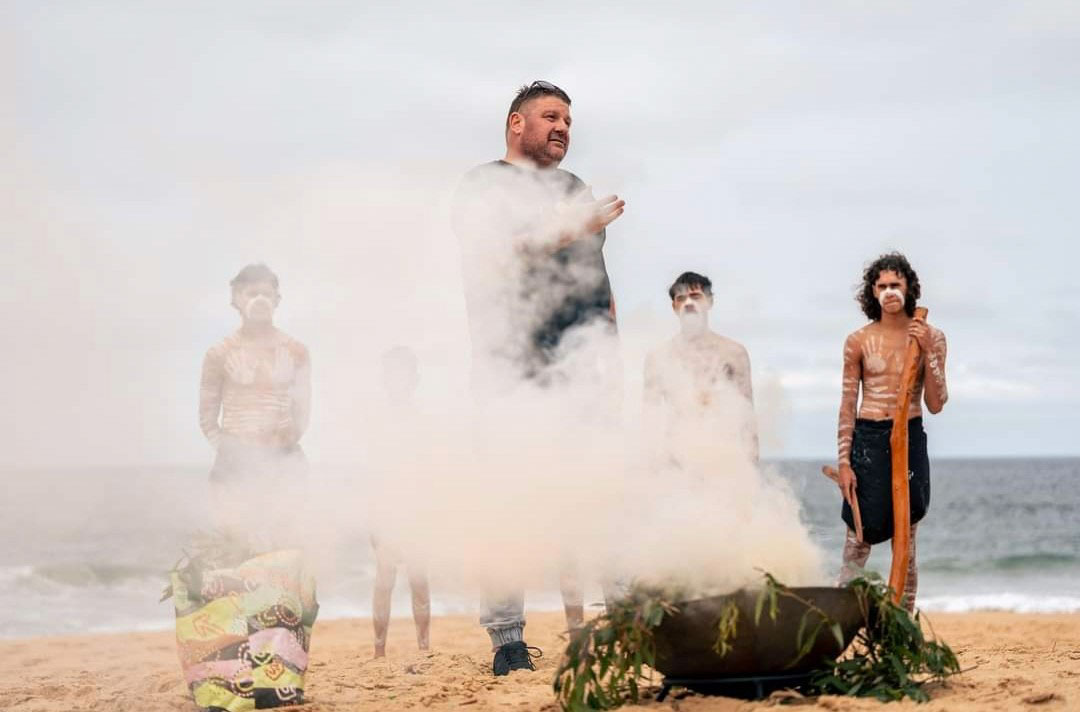
Robert Ogden is a Bunurong, Tyereelore, and Trawoolway man currently living in Clyde, in Melbourne’s eastern suburbs, where he is a Traditional Custodian and Heritage adviser, and was recently the Bunurong People’s representative for Treaty discussions in Victoria.
When growing up in Launceston, northern Tasmania, Robert remembers first being exposed to environmentalism through his mother’s protest against the damming of the Franklin River. “She was one of the protesters for the Lower Franklin River in the late 70s and early 80s,” he recalls.
“Later, we used to go with her on weekends and then to the protest marches up in Jackie’s Marsh against the logging. So it was really my mum taking me along to these protest marches that sparked that interest as I got older in life.”
It was also during his teenage years in Launceston that Robert would go out 4-wheel driving with his dad, just 20 km outside of Launceston. He has vivid memories of encountering logging coups at places like Ben Lomond National Park and being shocked by the devastation and the trails of dead animals caused by baiting around them.
“I asked my dad why this has happened, and he’d just say – Oh, they’ve been baited by logging companies. It was like a scar on the landscape. Then, in my early 20s, when I started working in the cultural heritage space, it hit me that, as well as the fauna and flora, there’s definitely going to be an effect on cultural heritage.”
It was partly from that experience of witnessing the ‘cowboy culture’ around environmental and cultural regulations in Tasmania in the 1970s that Robert was led onto his career path. “We lost a lot of places – lost a lot of vulnerable animals and vegetation. I take my family down to Tassie a couple of times a year nowadays, and you can still see those scars everywhere you go.”
At the age of 17, Robert moved to live with his grandmother in Melbourne, and they travelled around Australia for the next 18 months before he moved back to the Bass Strait Islands. It was there that he began applying his interest in preserving Aboriginal heritage by working with the National Parks and Wildlife Service.
Robert has since worked for two decades, focusing on Indigenous Cultural Heritage Management, leading policy and cultural changes across many sectors of government and business in Victoria. “For the past decades, there’s been a lot of legislation around Indigenous cultural heritage, but it’s been written by non-Indigenous people. That needs to change,” he says.
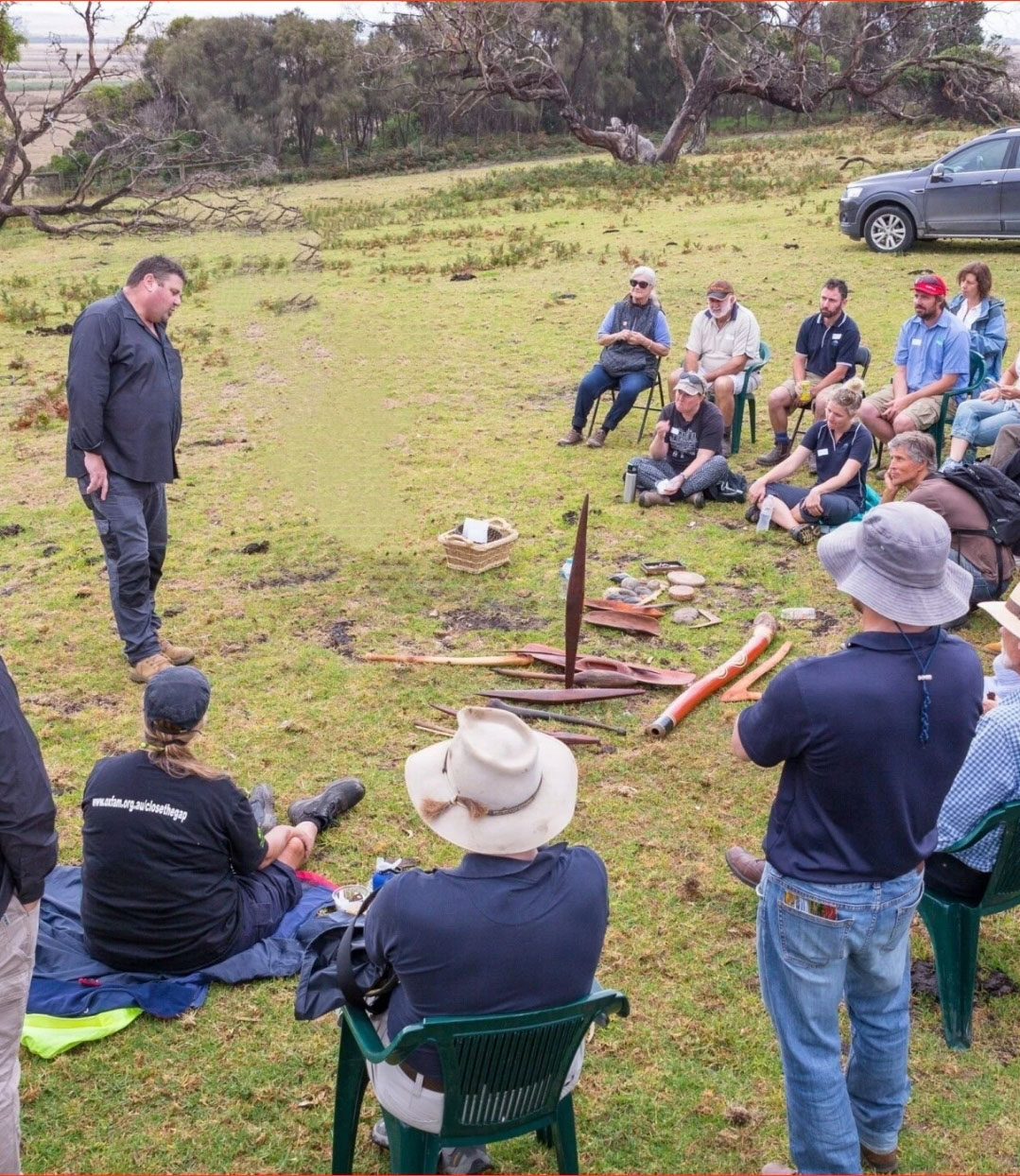
One of the things Robert enjoys most these days is leading cultural walks to various sites, including the Maribyrnong River, Dandenong Creek, Werribee River, Upper Pakenham Reserve, Bunyip State Park, and Swan Lake on Phillip Island.
But he says he is seeing the impacts of climate change on these areas firsthand and worries about the coming decades, particularly regarding rising sea levels and their effects on ancient, culturally significant sites. “My walks take me along the Bass Coast down to Wilson’s Prom, and I see all of these ancient archaeological midden sites, and they’re being impacted.”
Aboriginal shell middens are archaeological sites containing concentrated remains of shellfish, bones, ash, and tools, representing past meals and long-term occupation by Indigenous people. “I could take you to places where we’ve lost three metres of midden. These are really important scientific places, but culturally really significant, environmentally really significant because it tells us a story at a certain time. The sea is rising and surging into the cliffs, and the cliffs are collapsing. So we’re losing cultural assets through the inundation of the rising seawater.”
Robert says his work on the Western Port Gas Terminal was one of his proudest moments in cultural heritage. “About five years ago, we took on AGL, who were saying, ‘ Oh, we’re talking to the Traditional Owners about this. But in reality, they were sending us a statement saying, “This is what we’re going to do.” We fought it and said that you haven’t done enough. You’re not doing enough.”
When the proposal was rejected, the panel acknowledged that they hadn’t adequately consulted or engaged enough with respect to the preservation of Aboriginal cultural heritage and songlines. After eight months of work, he says the outcome was gratifying, but is also philosophical about how all the groups could have worked better together.
“There was some friction between the groups even though they’re all there to do the right thing, around preserving the environment and control of the narrative. Even though we did get a victory, the victory could have been a lot earlier if we had all come together and expressed our concerns as one.”
As the previous Bunurong representative for the first iteration of the Treaty in Victoria, Robert believes the Treaty offers the greatest hope for Victoria, for both First Nations people and the broader community. “Treaty is something that can bring everyone together, but it also can start to resolve a lot of the issues that Aboriginal people have from an environmental point of view.”
Robert says the Treaty will help centre a really strong cultural voice for Indigenous people in environmental and cultural decision-making. “A decade ago, Treaty was a thought. Then, three years ago, it became a dream. Now it’s reality.”
“The next phase of it is actually doing the things that we’ve always talked about that we wanted to see happen. Using a treaty as the mechanism to do that from a cultural, environmental, and community perspective. We can start to actually implement that.”
“And I think that is the greatest hope.”