Blog | 16th Oct, 2026

Polluting & expensive: What Liberal and One Nation energy policies will mean for you

44.6% of Victoria’s electricity now comes from clean energy and our abundant sun and wind is the reason Victoria has the cheapest wholesale power in the country.

But instead of getting on with the job of replacing our ageing coal power stations with cheap clean energy, the Liberal-National Coalition and Pauline Hanson’s One Nation want to slam the brakes and gamble on expensive gas and old, unreliable coal.

In this post:

  1. Why blocking clean energy will mean higher bills
  2. Sweating old coal power stations is a recipe for breakdowns
  3. What happens when a coal power station breaks down?
  4. The cost of scrapping critical grid connections
  5. Filling the gap with gas, the most expensive form of energy!
  6. Bonus mythbuster, gas is going to stay expensive
  7. A toxic nuclear fantasy that Australia has already rejected
  8. The choice for Victorians >>

⚡️💸 Why blocking clean energy will mean higher bills 💸⚡️

Building new clean energy is the fastest way to bring down bills, and a new independent report we released with Nexa Advisory puts numbers on what blocking and delaying clean energy projects would cost Victorians, and the risks it poses to keeping the lights on.

Here’s how it plays out …

Sweating old coal power stations is a recipe for breakdowns

Yallourn is closing in 2028, and Loy Yang A in 2035. Like any machine, coal power stations don‘t last forever, and as they get older they become more unreliable and harder to maintain.

Yallourn, which is Victoria’s oldest coal power station, has run up an average of 8000 hours of downtime each year since 2020.

Slamming the brakes on clean energy projects would force Victoria to run these old coal power stations past their use-by date, which means exposing our energy grid to more and more breakdowns. But this is exactly what the Liberal-National coalition and Pauline Hanson’s One Nation are promising.

What happens when a coal power station breaks down?

In winter 2025 a critical air duct at Yallourn coal power station collapsed and three generation units went down at once. Wholesale electricity prices spiked, and gas generation had to start up to cover the gap – pushing gas prices up and creating an expensive feedback loop.

This is what “keeping coal running longer” means in practice – more breakdowns and more reliance on gas – the most expensive source of electricity.

Despite this basic reality, One Nation wants to force AGL’s Loy Yang A power station to keep running past its scheduled closure of 2035. The Coalition has been more vague, saying coal “has a role to play… while alternative energy resources come online” – while also promising to scrap transmission projects and introduce a blanket ban on wind turbines within 2km of a property, a rule the Clean Energy Council says would effectively kill Victoria’s wind energy industry.

What’s more, the companies that run the power stations haven’t been consulted by either party. AGL confirmed Loy Yang A is still closing in 2035. EnergyAustralia has repeated, more than once, that Yallourn’s 2028 closure date isn’t moving.

That’s a reckless way to treat something as important as our energy grid. Energy policy should be based on Victoria’s long-term interest, not short-term politics.
⛓️‍💥 The cost of scrapping critical grid connections ⛓️‍💥

Both parties are proposing to scrap and delay the most affordable, and fastest options we have for building new energy supply.

Our national energy grid runs all the way from Queensland to South Australia and has always relied on critical transmission lines to link key areas of power generation with our homes and businesses.

Transmission projects like VNI West and the Western Renewables Link are needed to harness our abundant, cheap, wind and solar energy.

But Jess Wilson’s Coalition wants to scrap VNI West outright. One Nation goes further still– cancelling both transmission links, abolishing the state’s renewable energy zones, banning offshore wind and blocking wind and solar on farmland – robbing farmers of the opportunity to diversify and earn drought-proof income from hosting renewable energy projects.

Our report with Nexa Advisory found that delaying transmission links would push wholesale power prices up 37% within four years and cost the average household at least $472.

Cancelling these projects outright would make it even worse.

😳 Filling the gap with gas, the most expensive form of energy! 😳

Scrapping transmission and new clean energy projects means there’s a huge gap to fill. And the Coalition and One Nation are both betting on methane gas – the most expensive way to generate electricity.

The price we pay for gas is also affected international conflicts like Donald Trump’s war with Iran, and neither party have said what their plan will cost, or whether gas generators can even be built in time.

Because of the explosion of energy-hungry data centres, the current waiting time for new gas turbines has blown out into the 2030s. It’s a huge gamble, and one that neither party has costed or properly planned for.

Myth-busted, gas is going to stay expensive …

Victoria’s cheap gas supplies in Bass Strait have almost run out, and what’s left is harder to reach and cost almost twice as much to extract – if there was cheap gas left in the ground, gas companies would already be drilling for it.

But, once again, the Coalition and One Nation are choosing to ignore inconvenient facts and talk about gas like there’s a secret stash waiting to be discovered.

It’s likely that what they mean is fracking, a process which pumps toxic chemicals into the ground and could lower the water table in Gippsland by more than 15 metres! Gippsland communities fought hard to ban it, and the Liberal-National Coalition hasn’t ruled out lifting that ban.

We’ve done a deep dive into gas in Victoria and the Liberal’s policy here >>

☢️ A toxic nuclear fantasy that Australia has already rejected ☢️

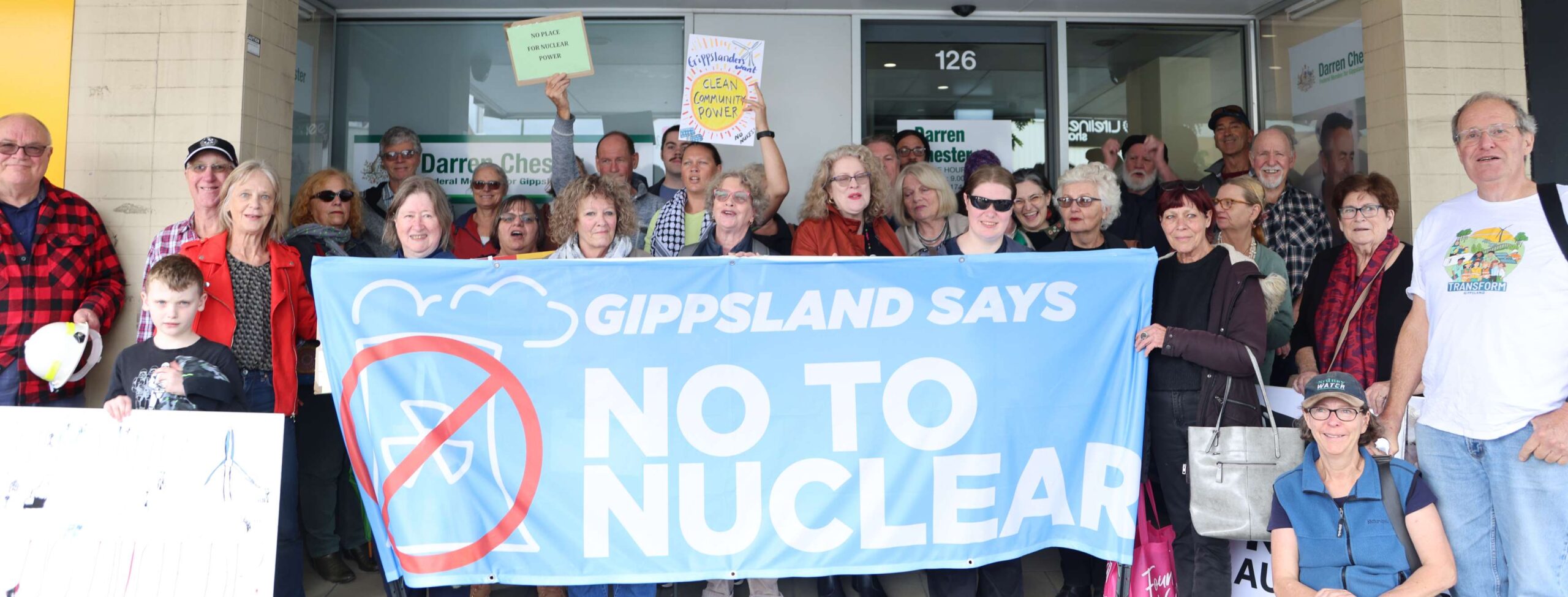
Last, and definitely least, is Nuclear. Despite voters rejecting the idea at the 2025 federal election, One Nation is still pushing nuclear – the most expensive and dangerous way to make electricity.

Australia has no nuclear power industry, so we have no experience, no regulator, no trained workforce, no plan to safely transport and store radioactive waste (actually nobody has that).

It would take decades before any energy was produced and it would be incredibly expensive. It is such a bad idea for Australia that we have a whole post on it here >>

🤔 The choice for Victorians 🗳️

Your power bill is on the ballot this November.

The switch to cheap clean energy is underway, and it’s working. Coal burning power stations are closing on schedule regardless of who’s in government — the only question is whether we’re ready with the power to replace them.

Getting on with the job of building wind, solar and storage means the lowest bills and slashing climate pollution. It means jobs and investment across regional Victoria, and energy that keeps the lights on.

Cancelling projects, running old coal power stations past their use-by date, and betting on expensive gas that may not arrive in time, means higher bills, more climate pollution, regions missing out on jobs, and a system we can’t rely on.

That’s the choice Victorian voters have.